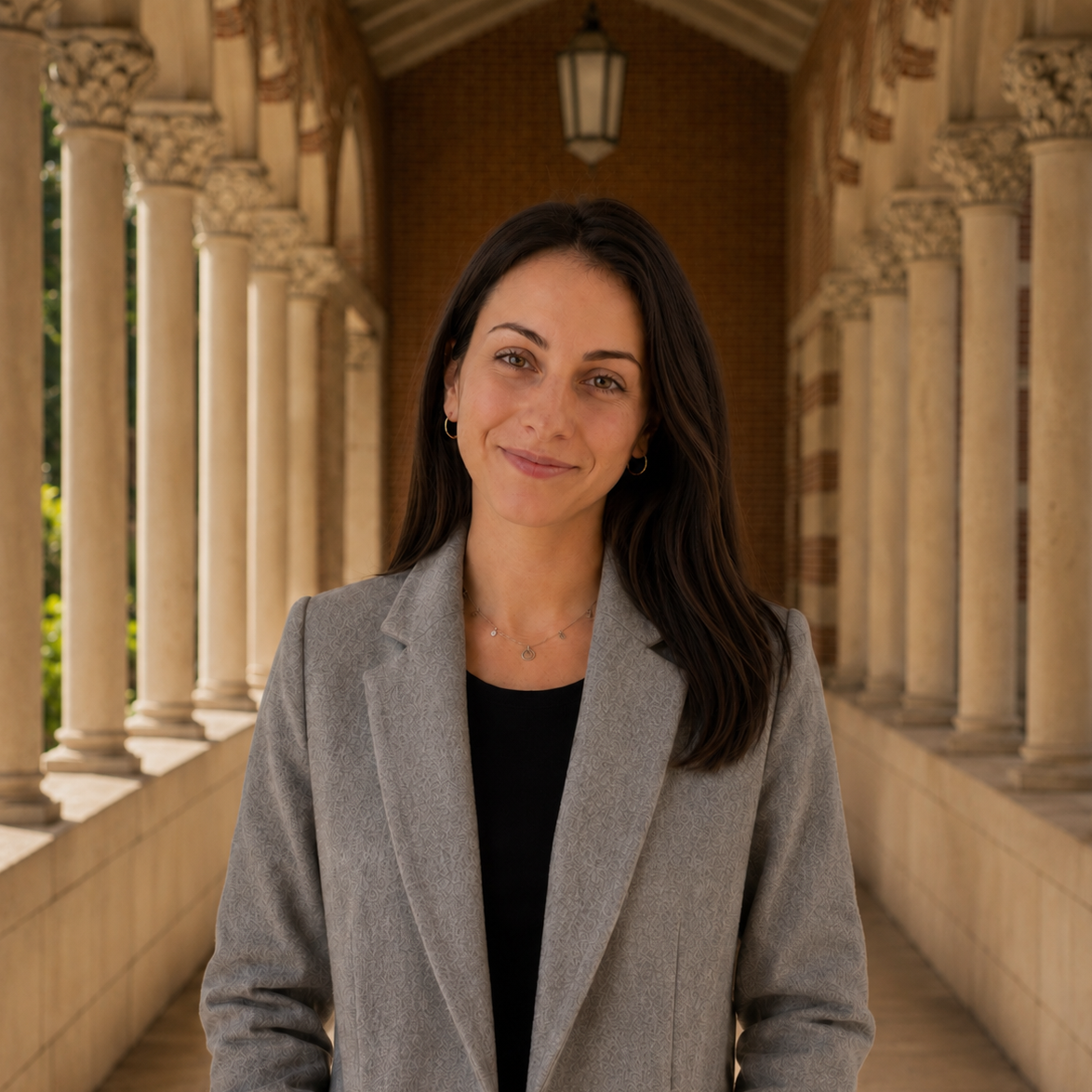
About Me
Welcome! I am a Ph.D. Candidate in Political Science and International Relations at the University of Southern California, with an emphasis on International Political Economy and Political Methodology. I am also a Graduate Research Assistant at The Security and Political Economy Lab. My research focuses on state–business relations, and in particular on how political uncertainty shapes firm behavior.
My dissertation examines how firms recognize and respond to political risk. By studying different sources of political uncertainty, I aim to understand how such risk affects firm behavior, through which channels it reaches them, and how firms adapt their strategies when the political environment shifts around them. Empirically, I combine establishment-level data on subsidiary placements, a large language model pipeline to analyze corporate textual data, and survey experiments.
Interests
- State–Business Relations
- Firms’ Nonmarket Strategies
- Text-as-Data Methods & Machine Learning
Education
M.A. Politics and International Relations, 2026
University of Southern California
B.A. Economics and International Affairs, 2023
Wagner College
Research
Working Papers
Who Influences Whom? Analyzing the Interplay of Mainstream and Outsider Parties in Social Media Campaigns
Abstract
Text-as-data research increasingly incorporates word order to recover meaning within documents. We extend this insight to document order by preserving each text's authorship, timing, electoral context, and position in a communication sequence. Our pipeline combines embeddings, topic modeling, LLM-based ideology scores, and dictionaries to measure issue attention, ideological positioning, populist appeals, and rhetorical proximity. It organizes these measures into daily actor-level series that identify who moves first, who follows, and along which dimension. We apply the framework to more than 7,000 YouTube transcripts posted by official party channels in Spain and the United Kingdom between 2015 and 2024. Responsiveness intensifies as election day approaches and flows in multiple directions. Coalition incentives generate mutual adjustment within Spain's left bloc; British competition stays centered on mainstream parties as outsiders sharpen issue and ideological distinctiveness. The application shows how combining multidimensional text measures with document order reveals strategic interaction in campaigns.
Social Ties, Managers’ International Experience, and Firm Political Participation
Abstract
Firms use social ties-personal relationships between firm leaders and counterparts at other firms and between firms and government officials-to facilitate political participation. We examine how firm managers of different types-foreigners, nationals, and nationals with international experience-shape firms' use of social ties and their political participation. We argue that firms who employ nationals with international experience (NIEs) as managers are unusually well positioned to form and leverage social ties for political ends. NIE managers combine local connections and familiarity with formal and informal host-country institutions with international connections and knowledge developed abroad. By strengthening firms' peer and political ties, NIE managers make political participation more likely and increase the probability that firms succeed in influencing government policy. We draw on new survey data covering 1,870 firms across seven Southeast Asian countries, with measures of firms' management composition, their peer and political ties, political participation, political tactics, and self-reported success in achieving policy objectives. Consistent with our theory, firms with NIE managers report more extensive peer and political ties, are more likely to attempt to influence government action, and are more likely to report success in doing so.